
 RO
RO  DE
DE  EN
EN 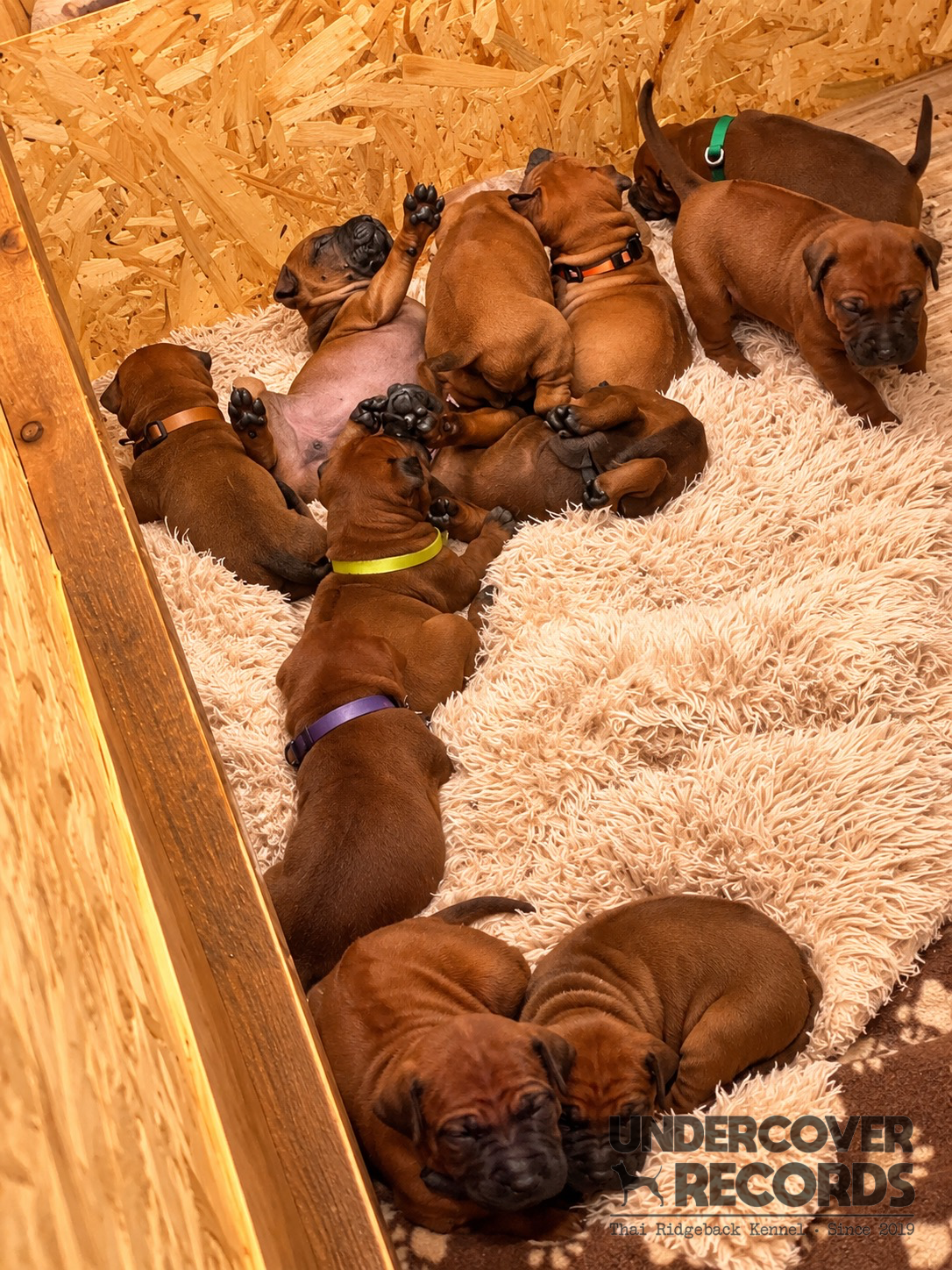
Our C Litter.
Same same but different.
Born 1–3 December 2024 · 11 puppies · all red
Sometimes dogs make their own plans.
A repeat pairing between Boss and Maya was not something we had planned at that point. Apparently, they had other ideas – and an unplanned mating became our C litter.
Between December 1 and 3, 2024, Maya gave birth to eleven puppies: two females and nine males.
It was a long birth, but overall it went largely without complications. Three of the males were significantly smaller than their siblings at birth and initially developed more slowly. Over time, however, they caught up.
Eleven puppies are a lot. A lot of work, very little sleep and always something to watch – and at the same time, one of those periods that seems to have passed far too quickly when we look back.
Eleven little personalities.
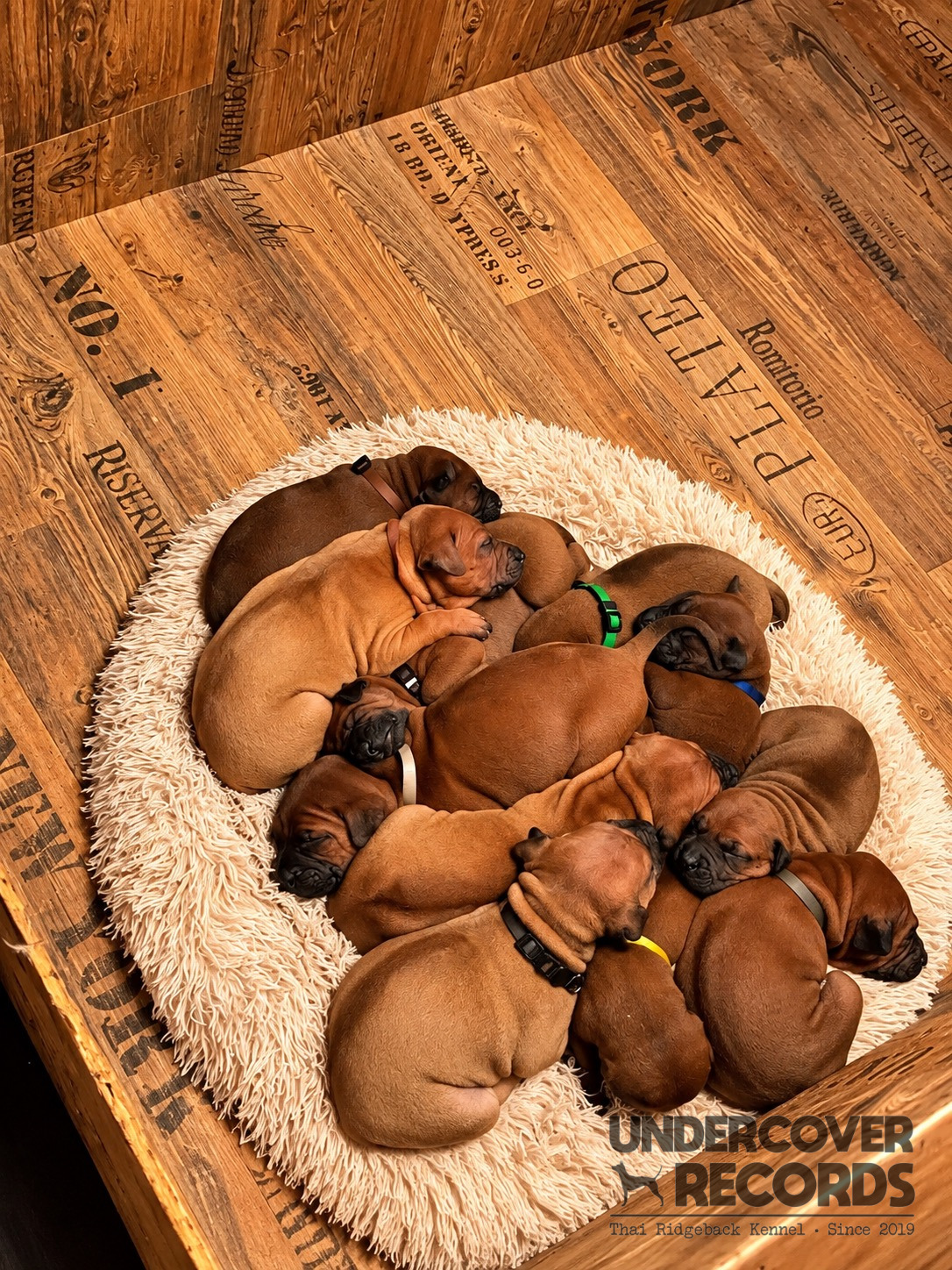
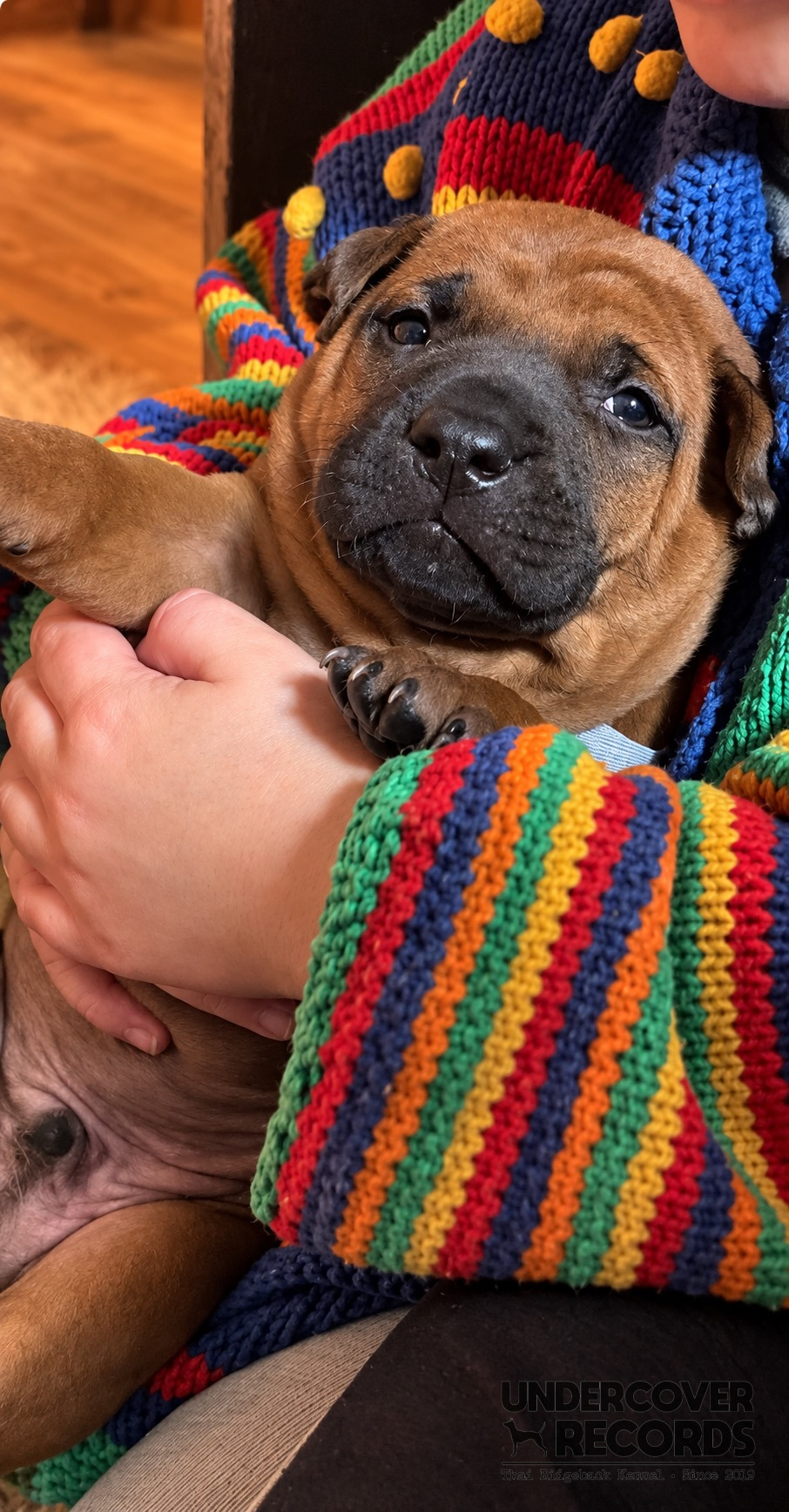
Same same – but different.
Boss and Maya had already given us seven puppies in our B litter, so naturally we wondered how similar the two litters would be.
We got our answer fairly quickly:
Same same – but different.
In the C litter, we once again see many of the qualities we appreciate in the combination of Boss and Maya. Overall, the puppies developed into active, well-balanced and socially competent dogs.
And yet the C litter is not simply a repeat of the B litter.
As a group, these dogs are less physical in their interactions with each other, while at the same time being considerably more communicative – or, to put it less elegantly: louder. The strong desire for physical closeness with people that we see in some of the B-litter dogs is also less pronounced in the C litter.
The same parents do not produce the same dogs.
And that is exactly what makes breeding so interesting to us.
Familiar genes, individual personalities.
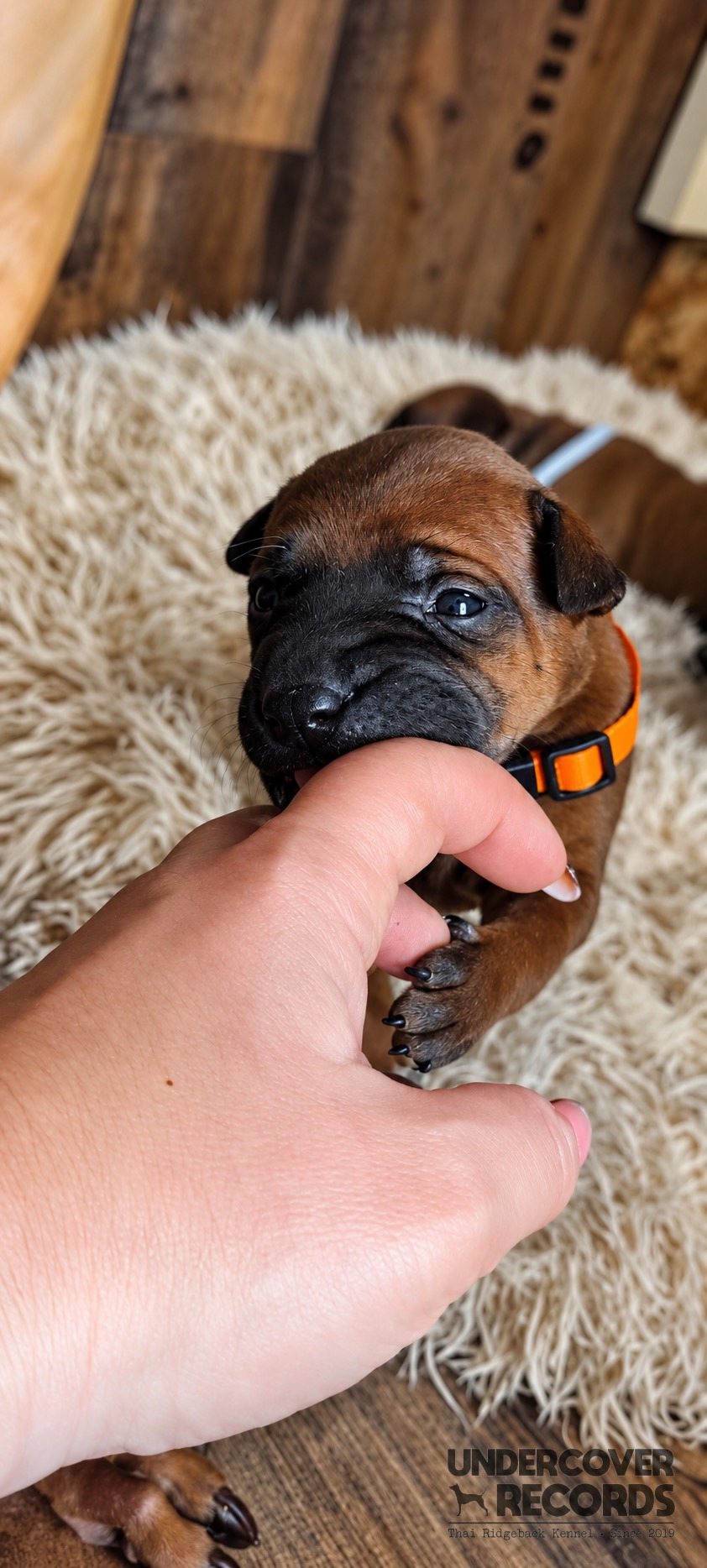
Eleven little gemstones.
For this litter, we chose names inspired by gemstones and minerals.
Not only because of their names or colours. We liked the idea that, for centuries, people have associated them with particular meanings, energies and qualities – whether you believe in those things or not.
All eleven puppies are red.
9/11 are DS free. The two affected puppies were operated on by us in April 2025.
For us, growing up happens in real life.
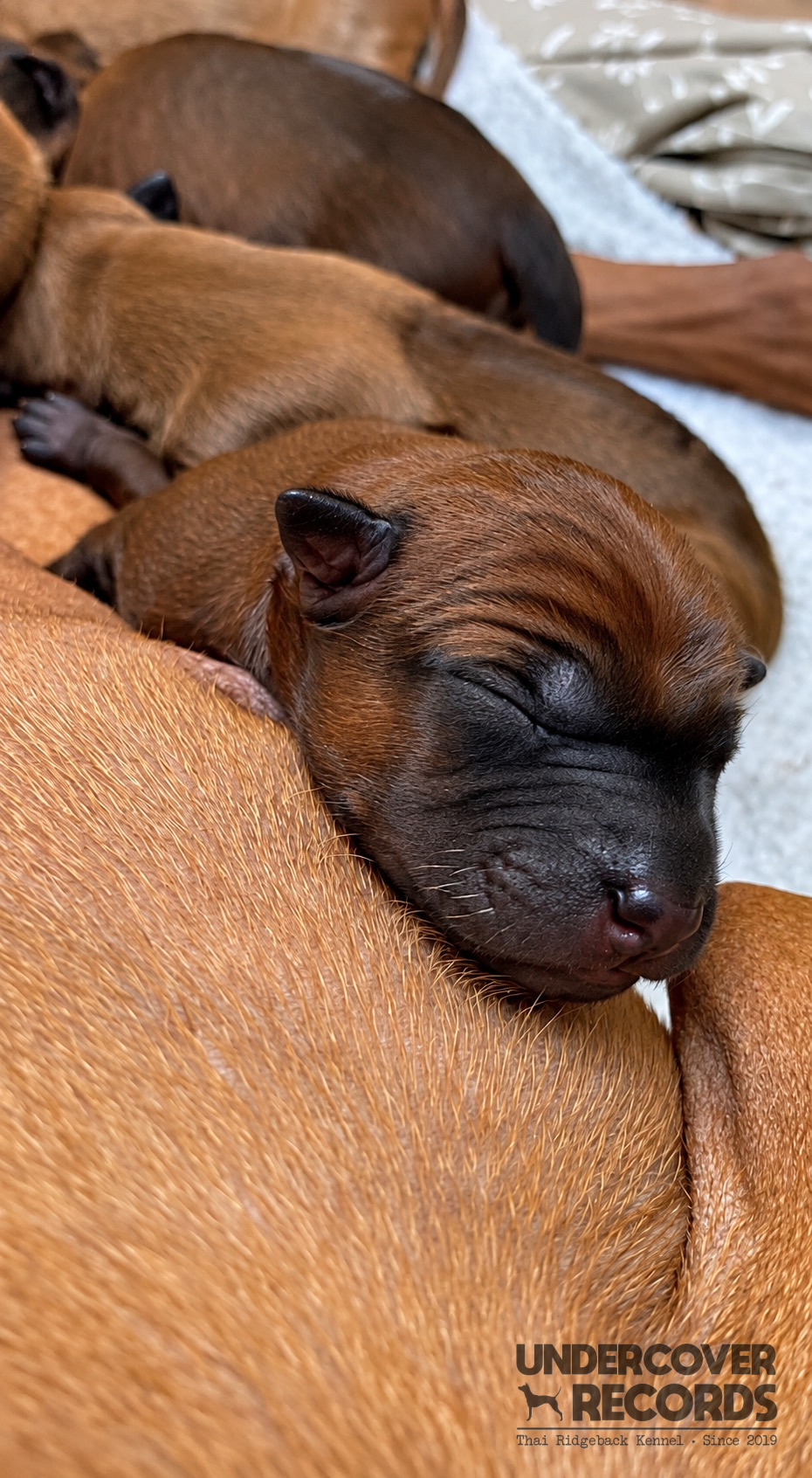
Our offspring.
When plans change.
With eleven puppies, no two develop in exactly the same way. And not every early idea remains the right one.
Tiger was initially intended for a co-ownership arrangement. As he developed, however, an underbite became apparent in his adult dentition. For us, that made it clear that the original plan would not be continued.
For a while, Tako was also a dog we considered interesting with regard to our future breeding plans. He moved to a home with his full brother Snickers from our B litter, and we continued to follow his development closely.
Over time, that plan changed as well.
We do not see that as a failed idea.
It is part of breeding.
A puppy can be promising. We can really like what we see in a young dog. And still, as that dog develops, the right decision may be not to include it in a breeding programme.
A litter that wrote its own story.
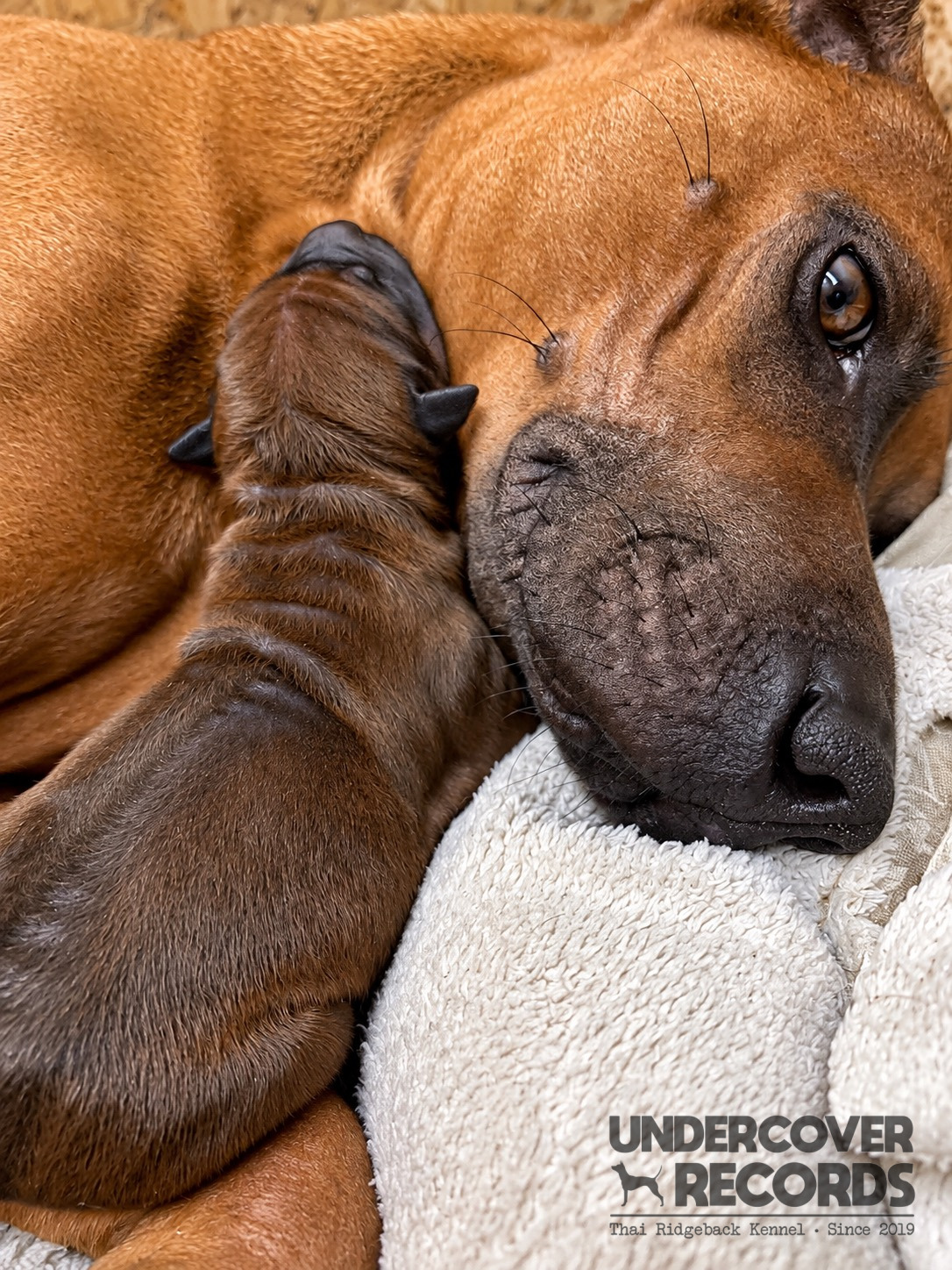
A decision about this litter.
At present, we do not plan to use any of the eleven dogs from our C litter for future breeding.
That does not mean this litter disappointed us.
Nor does it mean that we now view the pairing of Boss and Maya differently as a whole.
Quite the opposite: there are many qualities we like in the C litter. In many respects, these dogs are developing exactly as we had hoped from this combination.
But for us, breeding does not mean that every good litter must automatically produce a dog for the next generation.
What matters is what our breeding programme needs at a particular point in time – in terms of health, temperament and physical structure.
Candy and Fred from the B litter also show very clearly that Boss and Maya have produced dogs we do want to continue working with.
Our decision therefore applies specifically to
this C litter and these eleven dogs
. It is not a general decision against the pairing or its offspring.
Tako remains just as interesting to us as his siblings. We want to see how they continue to develop, what they are like as adults and what they can teach us about this combination over time.
Because finding a dog interesting and actually planning to breed from that dog are two different things for us.
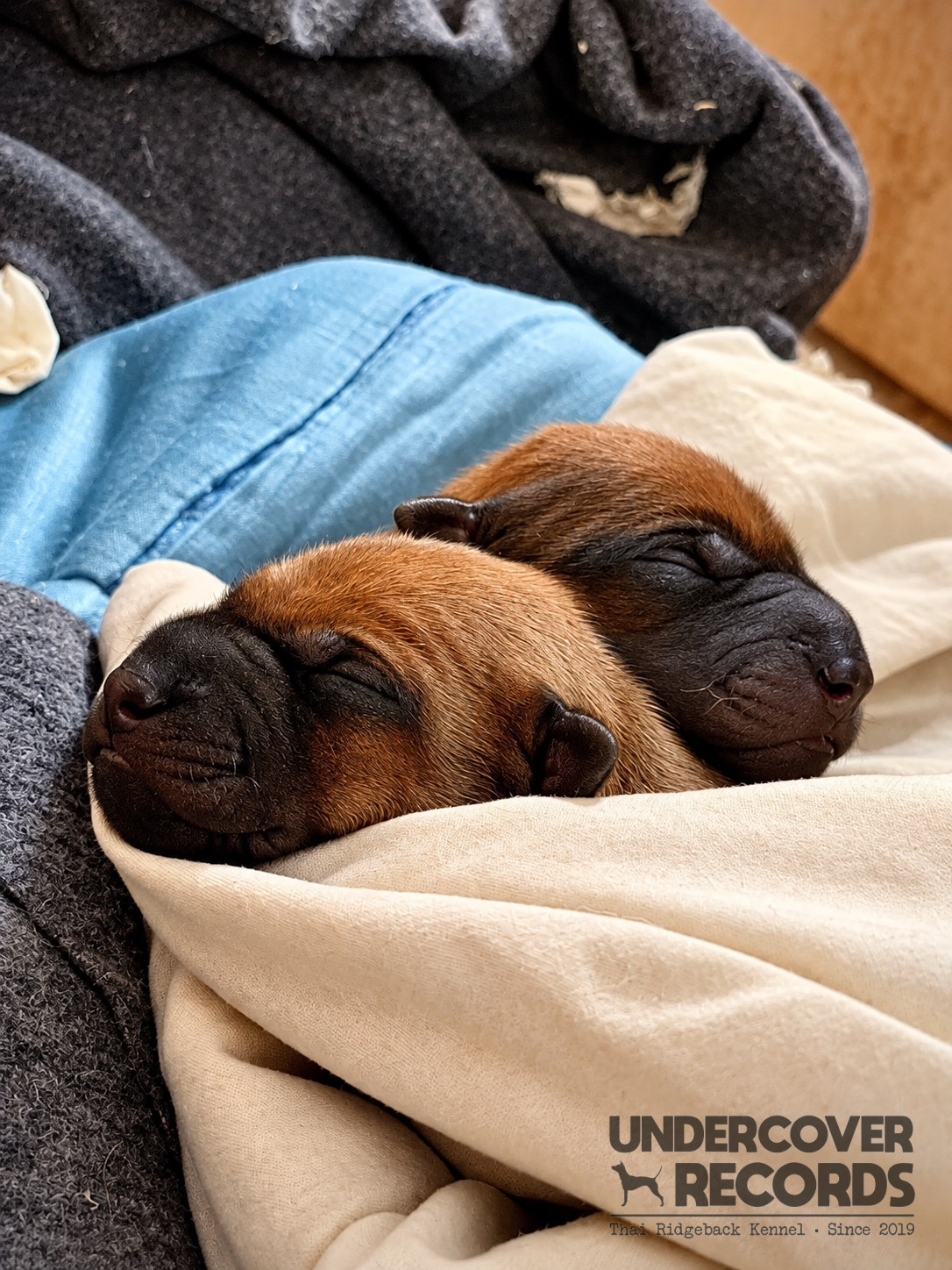
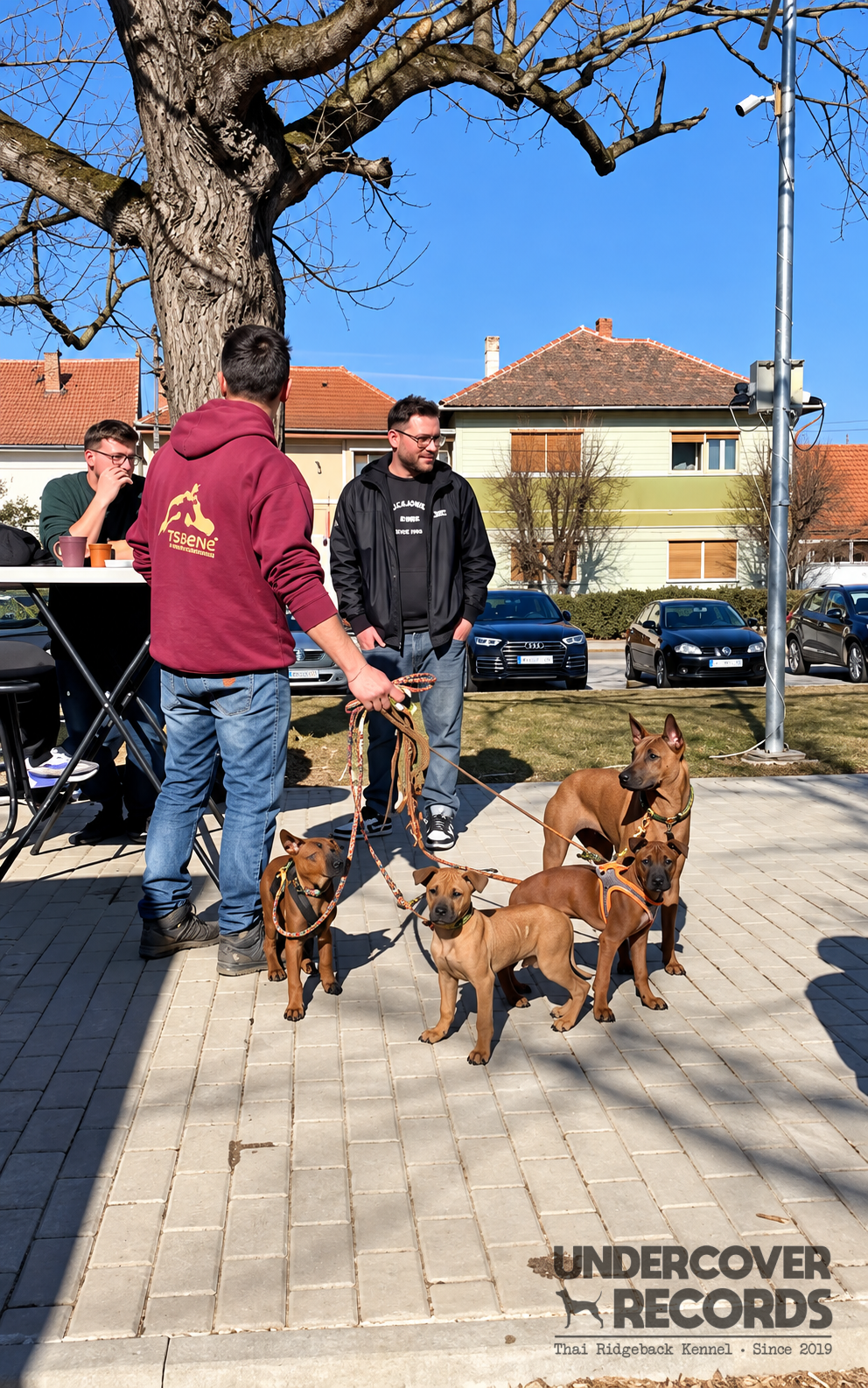
What this litter leaves with us.
The C litter reminded us once again how little breeding can ever be completely planned.
The same parents.
A combination we already knew.
And yet eleven new dogs, each with their own strengths, individual traits and development.
We can study pedigrees, compare health results, observe dogs over many years and think very carefully about what we expect from a pairing.
And we do.
But in the end, breeding does not produce a made-to-order result.
It produces dogs.
And that is where our real responsibility begins: to keep watching, to assess honestly and to be willing to change our original ideas when the dogs’ development shows us something different.
Perhaps that is why no other phrase describes this litter quite as well:
Same same – but different.